
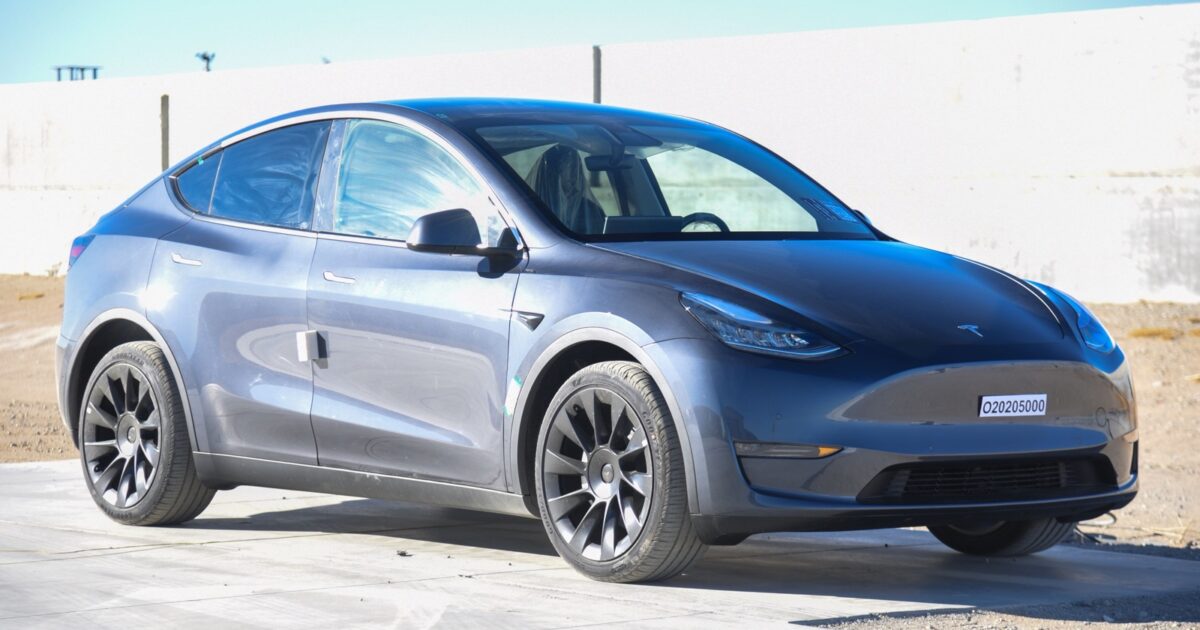
NHTSA has rejected Tesla’s attempt to avoid a remedy for a headlight issue affecting nearly 20,000 older Model 3 and Model Y vehicles.
The decision does not accuse Tesla of hiding crashes or injuries. Tesla told regulators it knew of none connected to the issue.
The fight is narrower than that: how much extra light is acceptable in a part of the low-beam pattern that can become troublesome when weather turns bad?
🚨 Tesla was denied a petition by the NHTSA to avoid a recall of 19,900 2017-2023 Model 3 and Model Y vehicles.
— TESLARATI (@Teslarati) July 16, 2026
The NHTSA found that the vehicles' headlights may exceed maximum lighting levels. Tesla argued it was inconsequential and did not require a recall. pic.twitter.com/m8Jmm1teLL
The National Highway Traffic Safety Administration says the petition covers approximately 19,917 vehicles. They are model year 2017 through 2023 Model 3 sedans and model year 2020 through 2023 Model Y crossovers built between October 27, 2017 and December 24, 2023.
The decision is limited to that production population, rather than every Model 3 or Model Y from those years. The case turns on a specific headlamp measurement.
At the disputed test point, NHTSA says the lower beams can produce up to 230.1 candela. The federal maximum is 125 candela, putting the measured peak 105.1 candela over the limit.
Tesla’s case was that the noncompliance was inconsequential to safety. The company argued that the area sits outside a driver’s direct line of sight and said its adaptive-driving-beam track testing found no unreasonable glare for oncoming drivers.
Tesla also told the agency it had not identified complaints, crashes, injuries, deaths, field reports or warranty claims related to the condition.
NHTSA was not persuaded. The agency’s concern is veiling glare, the washed-out effect that extra light can create when it scatters through rain, snow, fog or dust. That can make roadway objects harder to see even when the light is not aimed straight into another driver’s eyes.
The agency also found a hole in Tesla’s testing. The track work took place in clear, dry conditions, so it did not reproduce the reduced-visibility environments at the center of NHTSA’s concern.
Teslarati translates the decision into practical terms for owners. Tesla did not persuade the agency that the lack of known incidents outweighed the headlamps’ departure from the federal standard.
The report also captures the tension inside the case. Tesla had real-world evidence in its favor, including the absence of known complaints and injuries, while NHTSA focused on a weather condition that the company’s own test did not cover.
It also puts the measured output beside the federal cap: up to 230.1 candela in a zone limited to 125. That is a large numerical miss even though Tesla disputed its practical effect on drivers.
The production dates matter too. The affected group ends with vehicles built on December 24, 2023, giving owners a far more useful boundary than the model-year labels alone.
The report leaves the remedy open because the federal decision leaves it open. There is no honest basis yet to promise an over-the-air update, a service-center repair or a headlamp replacement.
That is how both sides could look at the same lights and reach different conclusions.
Tesla evaluated whether the overage had produced a demonstrated safety problem. NHTSA evaluated whether it could produce one under conditions the clear-weather test left unanswered.
The regulatory answer now controls. NHTSA says Tesla must notify affected owners and provide a free remedy.
The filing does not say whether that remedy will be a software adjustment, a hardware repair or some combination. Until Tesla issues the owner communication, anyone promising a specific fix is getting ahead of the record.
Owners do not need to panic, especially with no known crash or injury history in the petition. They should watch for an official Tesla notice and confirm whether their VIN is included once the campaign information becomes available.
Tesla made a serious argument, and the clean incident record deserves to be part of the story. NHTSA still had the stronger hand on one point: a clear-weather test cannot settle a concern built around rain, snow and fog.
Now the smartest move is straightforward. Give owners the exact population, explain the fix clearly, complete it for free, and close the file.
Join the conversation!
Please share your thoughts about this article below. We value your opinions, and would love to see you add to the discussion!