

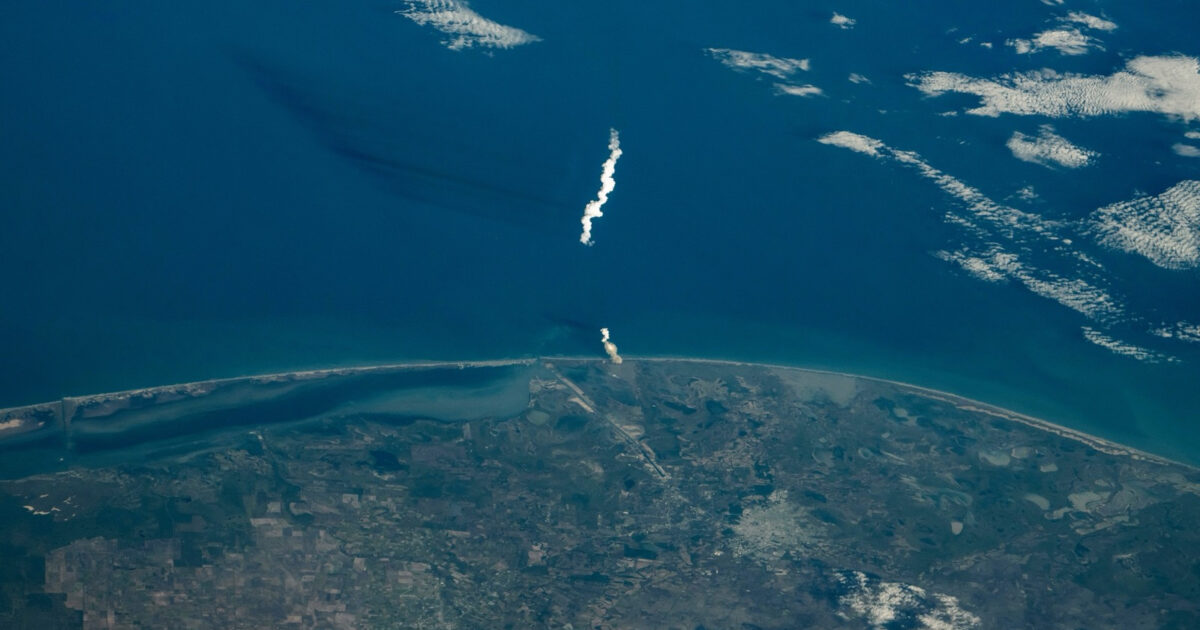
SpaceX came within a heartbeat of sending Starship Flight 13 skyward Thursday evening. Then the rocket did exactly what it should do when an engine-start sequence was not healthy enough to continue: it stayed on the pad.
Some of Super Heavy’s 33 Raptor engines did not start, and the launch system triggered an automatic abort before liftoff. Teams at Starbase then began draining the fully fueled vehicle.
Nobody wanted a scrub at the final second. A clean automatic stop is still far better than asking a 400-foot rocket to leave the ground with an engine sequence outside its launch criteria.
Elon Musk confirmed the basic sequence soon after the attempt ended.
Some of the engines didn’t start, triggering an automatic launch abort.
— Elon Musk (@elonmusk) July 16, 2026
Now offloading propellant.
Next launch attempt hopefully in a few days.
That explained the scrub. It also left ground teams with an intact vehicle to inspect instead of a problem already in flight.
Reuters reported that Flight 13 triggered a last-second abort before liftoff after some of Super Heavy’s 33 engines failed to start. SpaceX began draining propellant from the vehicle while teams worked through the next steps.
Thursday’s attempt was set to begin at 5:45 p.m. Central, at the opening of a 90-minute window. The abort came during the T-0 ignition sequence, before the 400-foot stack ever left the launch mount.
The report also carried Musk’s plan to replace two Raptors and his early-next-week expectation. Musk had not publicly explained why some engines failed to start, and the company had not identified the two units coming out.
Replacing two Raptors does not establish that exactly two engines failed during Thursday’s sequence. It tells us what SpaceX plans to change, not the complete root cause.
The immediate work is inspection, engine replacement and checkout. SpaceX has a repair direction, but it has not published a detailed diagnosis or a final go-for-launch decision.
Musk described the swap as the path to greater confidence in the next flight.
To be confident of a good flight, 2 Raptors will be removed & replaced. Most probable launch timing is early next week.
— Elon Musk (@elonmusk) July 17, 2026
Before another countdown, teams still have to finish the engine replacements, re-stack Ship, complete the required checks and make sure the problem that stopped Thursday’s attempt is understood well enough to fly.
Space.com says the new target is Monday, July 20, during a 90-minute window that opens at 6:45 p.m. Eastern. For Starbase and Central-time watchers, that is 5:45 p.m. CDT.
Its mission report explains that Flight 13 will be the second test of Starship Version 3. Flight 12 sent Ship through most of its planned suborbital trip, but Super Heavy missed its controlled Gulf splashdown and Ship did not complete an intended in-space Raptor relight.
Flight 13 is supposed to push that campaign forward while carrying 20 next-generation Starlink V3 satellites on a suborbital deployment test. Six of those satellites are equipped with cameras intended to observe Ship’s heat shield during the flight.
It is a heavy test card. Version 3 has to demonstrate repeatable starts and reliable engine behavior before Starship can move from spectacular test flights toward routine work.
The scrub also proved that the launch system recognized an unhealthy start and shut the sequence down while the rocket was still supported by the pad. SpaceX kept the vehicle, the pad and the data needed to investigate instead of turning an ignition problem into a flight problem.
Monday remains a target, not a promise. Engine work, inspections, weather or a fresh technical finding can move the attempt, and SpaceX should take every hour it needs.
The path back to the countdown is already visible. Two Raptors come out, the stack goes back together, and Flight 13 gets another chance to light all 33 booster engines cleanly.
Starship did not leave the pad Thursday. If the repair and checkout hold, the automatic abort may be remembered less as a failed launch than as the moment the rocket knew not to launch at all.
Join the conversation!
Please share your thoughts about this article below. We value your opinions, and would love to see you add to the discussion!