

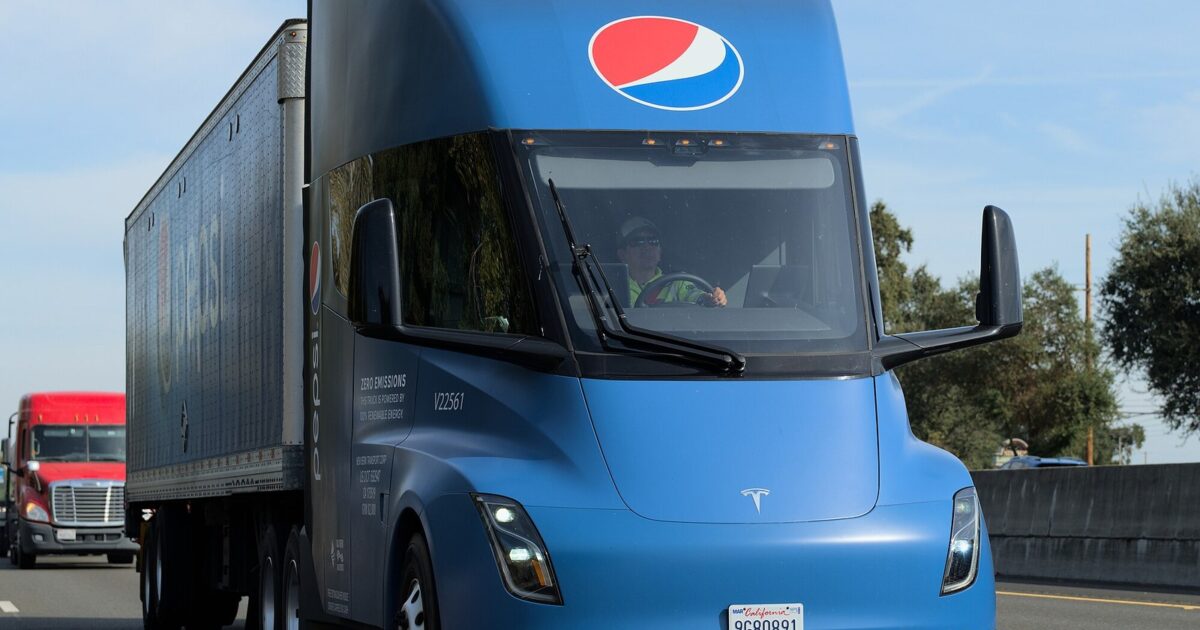
After years of “soon,” the Tesla Semi factory is now an actual, standing, operational building in Nevada — and the first high-volume trucks are about to start rolling out the door.
Elon Musk confirmed this month that the Gigafactory Nevada Semi expansion is moving into active production of the Tesla Semi. This is the factory that is going to flip the Semi from “small pilot fleet with Pepsi” to mass-market electric trucking.
Here’s Elon with the update:
Tesla Semi https://t.co/U8yQUYHVJS
— Elon Musk (@elonmusk) April 10, 2026
Sawyer Merritt has been tracking the Semi ramp closely and posted some of the clearest visuals on what the Nevada site actually looks like right now:
First look at Tesla's brand new Semi truck factory in Nevada. Seems like production will be starting very soon!
— Sawyer Merritt (@SawyerMerritt) March 5, 2026
When fully ramped, the factory will be able to produce 50,000 vehicles a year, generating over $13 billion in revenue. https://t.co/MLG7xJ8njG pic.twitter.com/HGjaWQ96t5
And a follow-up with the production lines inside:
Tesla Semi frame moving through the new factory in Nevada.
— Sawyer Merritt (@SawyerMerritt) March 8, 2026
When fully ramped up, the factory will be able to produce 50,000 electric semi trucks per year.
Video via @corememory: https://t.co/aLWToErw8Z pic.twitter.com/kdaOtsMHHr
The scale is legit. This is not a “we’re going to build a factory” tweet. This is “the factory is built, lines are in, production is starting.” Huge difference.
InsideEVs laid out what the next 12 months are supposed to look like:
Tesla’s Nevada Semi factory is designed to eventually produce up to 50,000 Class 8 trucks per year, a scale that would make Tesla one of the largest electric Class 8 manufacturers in North America almost overnight.
Initial customers are expected to include PepsiCo, which has operated a pilot fleet since 2022, along with new fleets from Sysco, Saia, and Walmart Canada. Tesla has signaled that high-volume deliveries will begin in the back half of 2026.
50,000 Class 8 trucks a year is a game-changing number. For context, that is a meaningful share of the entire US heavy-truck market. And once Tesla has the megawatt charging corridors in place, diesel’s last stronghold — long-haul freight — starts to crack.
Teslarati zoomed in on the Megacharger story that makes the Semi actually useful in real fleets:
Alongside the factory itself, Tesla is building out a dedicated Megacharger network along key freight corridors in California, Nevada, Texas, and the Midwest. A single Megacharger session can add roughly 400 miles of range to a Semi in about 30 minutes, which is what makes the truck viable for the long-haul routes diesel has dominated for decades.
400 miles in 30 minutes. On a Class 8 truck. That’s the number that has trucking fleet operators running the math — because at that point, the economics of diesel simply stop working.
Tesla Semi has been the quiet giant of the Tesla lineup for years. Now it’s loud. The factory is real, the customers are lined up, and the charging network is coming online. If 2026 ends with tens of thousands of Tesla Semis on the road, Tesla isn’t just an EV company anymore — it’s a freight company.
Join the conversation!
Please share your thoughts about this article below. We value your opinions, and would love to see you add to the discussion!