
Elon Musk isn’t just building cars and rockets anymore. He’s building toward a future where work itself becomes optional — and on Friday morning, he told 32 million people exactly what that looks like.
In a post on X that exploded overnight, Musk laid out his vision for “Universal High Income” — not the basic survival checks you’ve heard politicians debate, but real, comfortable income for everyone, funded by the massive productivity gains from AI and robotics. And if you’ve been paying attention to what Tesla is doing with Optimus, the AI5 chip, and autonomous vehicles, this isn’t a random thought experiment. It’s the endgame.
Here’s what he said:
Universal HIGH INCOME via checks issued by the Federal government is the best way to deal with unemployment caused by AI.
— Elon Musk (@elonmusk) April 17, 2026
AI/robotics will produce goods & services far in excess of the increase in the money supply, so there will not be inflation.
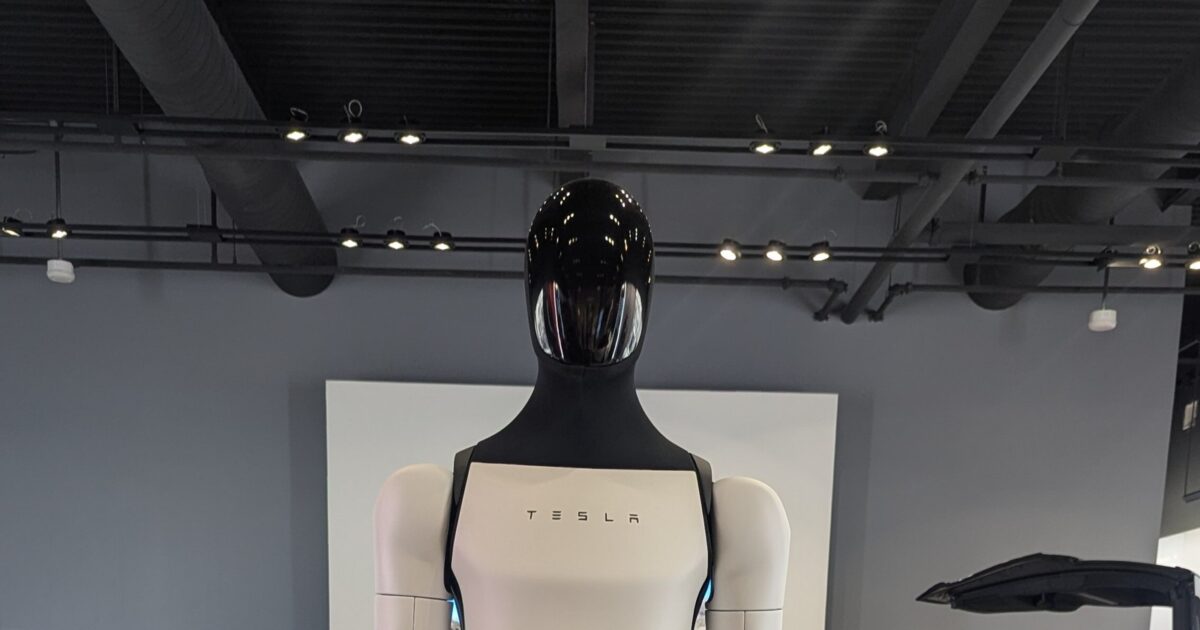
Read that again: “AI/robotics will produce goods and services far in excess of the increase in the money supply.” That’s not science fiction. That’s the thesis behind everything Tesla is building right now — Optimus V3, which is on track for production later this year. The AI5 chip, which just taped out last week. The Cybercab fleet growing in Austin. The Robotaxi network that’s about to expand across the country.
Musk is essentially saying: when you have billions of humanoid robots producing goods, driving vehicles, and running factories 24/7 without fatigue, without healthcare costs, without wages — the total output of the economy becomes so enormous that governments can afford to pay everyone a high income and STILL have deflation instead of inflation.
Yahoo Finance broke down the implications:
Musk advocates for “universal high income via checks issued by the Federal government” to address AI-driven job displacement. This concept differs from Universal Basic Income by targeting comfortable living standards rather than mere survival-level payments. He predicts deflation instead of inflation, framing it mathematically: when goods and services growth exceeds money supply growth, prices should decline rather than rise.
Translation: This isn’t your grandfather’s welfare proposal. Musk is describing a world where Tesla’s robots and AI systems create so much abundance that poverty literally becomes obsolete. And he’s not talking about some distant century. He’s talking about the logical conclusion of what Tesla is building RIGHT NOW — at Giga Texas, at Fremont, and in the supercomputer clusters powered by AI5.
Not everyone is on board yet. Zoho CEO Sridhar Vembu fired back within hours:
Universal High Income is a dystopian view that assumes that technology displaces all "paid work" so humans have to be paid by the government to consume the vast output of automated factories and AI.
— Sridhar Vembu (@svembu) April 17, 2026
Elon is making two assumptions: a) AI tech will lead to extraordinary explosion… https://t.co/mYSCZlGWfQ
Vembu’s pushback is fair — and it highlights exactly why what Tesla is doing matters so much. The question isn’t whether AI will transform the economy. That train has left the station. The question is whether companies like Tesla can actually deliver the hardware — the Optimus robots, the autonomous fleets, the energy systems — that make Musk’s vision physically possible.
BusinessToday put the stakes in perspective:
Universal High Income is an evolution of Universal Basic Income proposed by Elon Musk. It envisions governments providing high-level income checks to all citizens — rather than subsistence-level payments — funded by the extreme productivity gains from AI and robotics. Musk argues that work would become voluntary, pursued for enjoyment rather than necessity.
Work becomes voluntary. Let that sink in for a second.
Whether you think Musk is ahead of his time or out of his mind, one thing is clear: Tesla isn’t just an automaker anymore. It’s a company building the physical infrastructure for a post-scarcity economy — one robot, one chip, and one autonomous mile at a time. And 32 million people just got a preview of where it’s all heading.
Join the conversation!
Please share your thoughts about this article below. We value your opinions, and would love to see you add to the discussion!